Do Freelancers Need a Business Bank Account? Here Is the Definitive Answer
One of the most common questions new freelancers ask is whether they actually need a separate business bank account, or whether using their personal checking account for everything is acceptable. The answer varies slightly depending on your business structure, but for most freelancers the answer is a clear and unambiguous yes — and the reasons go far beyond what most people expect.
This guide covers every argument for having a dedicated business account, explains the specific legal implications for LLCs, and makes the case that the question is not really whether you need one but rather which one to choose.
The Short Answer
Sole proprietors are not legally required to have a separate business bank account in the United States. There is no federal or state law mandating it for unincorporated self-employed individuals. However, not having one creates significant financial, tax, and operational problems that make the legal permission largely irrelevant in practice.
If you have an LLC, the situation changes materially: while technically not always legally required, maintaining a separate business account is functionally essential to preserve the liability protection that is the primary reason for forming an LLC in the first place.
The Tax Argument: Hours Saved and Money Found
This is perhaps the most immediately compelling reason for most freelancers. Consider what happens at tax time when you have mixed personal and business finances in a single account:
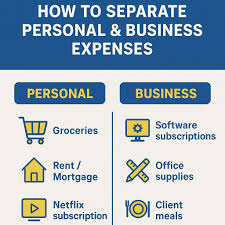
You must review every transaction — potentially hundreds or thousands over the course of a year — and determine whether each one was a personal expense or a business expense. Was that Amazon purchase the business USB hub or the personal book? Was that restaurant charge a client meeting or dinner with friends? Was that software charge the business subscription or the personal streaming service?
This process is tedious, error-prone, and time-consuming. Worse, you will inevitably miss deductible expenses that you cannot confidently categorize months after the fact — money you are legally entitled to deduct but cannot claim because you cannot document it.
With a dedicated business account, every transaction is business-related by definition. You connect the account to your accounting software, transactions import automatically, categories are applied, and your deductible expenses are captured comprehensively without manual effort. The time savings alone — often five to ten hours per year — justify opening the account. The additional deductions you capture are pure financial benefit.
The Deduction You Almost Certainly Miss Without a Business Account
One of the most commonly missed deductions for freelancers who commingle finances is bank fees. Business banking fees are fully deductible. Payment processing fees from PayPal, Stripe, or other platforms are fully deductible. Wire transfer fees for business transactions are deductible. When these charges appear mixed with personal transactions in a personal account, they are routinely overlooked at tax time.
→ Best Tax Deductions for Freelancers and Independent Contractors
The Legal Argument: Protecting Your LLC
If you have formed an LLC specifically to protect your personal assets from business liabilities, maintaining a strict separation between personal and business finances is not optional — it is the mechanism through which that protection functions.
Courts in the United States can and do pierce the corporate veil — a legal doctrine that allows creditors, plaintiffs, or tax authorities to hold LLC members personally liable for business obligations when the LLC has not been operated as a genuinely separate entity. Commingling personal and business funds in a single bank account is one of the most frequently cited factors in corporate veil piercing cases.
The protection you paid for when you formed your LLC exists only as long as you respect the separation between yourself and your business. A business bank account is the most visible and concrete demonstration of that separation.
→ LLC vs Sole Proprietorship for Freelancers
The Cash Flow Clarity Argument
Running a freelance business without being able to clearly see your business income and expenses is like driving with a fogged windshield. You can move forward but you are constantly at risk of missing something important.
A dedicated business account gives you an immediate, unambiguous answer to essential business questions: How much did I earn this month? How much did I spend on operations? What is my current business cash position? Am I earning more or less than last quarter? Which clients are paying promptly and which are consistently late?
These are not abstract questions — they drive concrete decisions about your pricing, your client mix, your investment in tools, and your hiring decisions. Without clean financial data, every decision is based on intuition rather than information.
The Credibility Argument: Professional Perception
Many corporate clients — and an increasing number of smaller businesses as well — prefer to pay a business entity rather than an individual. Receiving a payment made out to “Freelancefinanceusa.com LLC” or “Your Business Name” rather than your personal name signals professionalism and organizational maturity.
A business bank account enables you to receive payments in your business name, print checks with your business name, and present a professional financial identity to clients and partners. For freelancers who aspire to grow their business beyond solo operations, this professional presentation is part of the foundation.
The Credit Building Argument
A business bank account is typically required to apply for a business credit card, and a business credit card is one of the primary tools for building a business credit profile separate from your personal credit. Business credit — scored by agencies like Dun & Bradstreet, Experian Business, and Equifax Business — determines your ability to access business financing, negotiate favorable payment terms with vendors, and present a creditworthy business identity to potential partners.
Starting the business credit building process early — even when your business is small — means that when you eventually need a business line of credit, a business loan, or favorable payment terms, your credit profile is already established.
→ Best Business Credit Cards for Freelancers
The Cheapest Route: No-Fee Online Banks
The most common objection to opening a business bank account is cost. Traditional banks charge $15 to $25 per month for business checking accounts. Over a year, that is $180 to $300 in fees for what is essentially a place to hold money.
The good news is that several excellent online banks offer completely free business checking accounts with no minimum balance requirements and no monthly fees. Relay, Mercury, and Novo are the three most popular options for freelancers, and all three offer features that exceed what traditional banks provide — multiple sub-accounts, accounting software integrations, excellent mobile apps — at zero cost.
The objection of cost is simply no longer valid. Opening a free online business bank account takes 15 minutes and eliminates every financial and legal problem described in this guide.
→ Best Bank Accounts for Freelancers in the US → Best Accounting Software for Freelancers 2026 → Complete Freelance Finance Guide