Financial Planning Checklist for Freelancers: 20 Things to Do Every Year
Managing your finances as a freelancer requires ongoing attention across multiple areas simultaneously: taxes, insurance, retirement, cash flow, legal structure, and more. Without a systematic annual review, things inevitably fall through the cracks — a missed quarterly payment, an outdated insurance policy, a rate structure that has not kept pace with your growing experience, or a retirement account that has been neglected through a busy stretch.
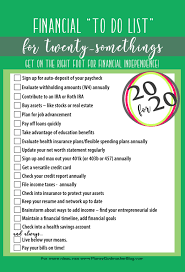
This 20-point annual checklist is designed to ensure that every critical aspect of your freelance financial life receives deliberate attention at least once per year. Work through it in order or in sections that match the time of year. The entire checklist requires approximately four to six hours per year — a small investment that pays dividends in financial clarity, tax savings, and peace of mind.
Q1: January to March
Item 1: Close Out Prior Year Books
January is the time to finalize your prior year financial records. In your accounting software, reconcile all accounts against final bank and credit card statements. Generate a profit and loss statement and a balance sheet for the prior year. These documents are the foundation of your tax preparation and your financial planning for the year ahead.
Review your prior year income by category: which services or clients generated the most revenue? Which were least profitable relative to time invested? Use this analysis to inform your business focus and pricing for the current year.
→ Best Accounting Software for Freelancers 2026
Item 2: Collect All 1099s and Verify Income
All clients who paid you $600 or more during the prior year must issue a 1099-NEC form by January 31. Collect all 1099s you receive and reconcile them against your own income records. If a 1099 shows a different amount than you recorded, investigate and resolve the discrepancy before filing your taxes — a mismatch between 1099s reported to the IRS and income on your return triggers automatic scrutiny.
Remember: you must report all self-employment income even for clients who did not issue a 1099 (payments under $600, clients who did not comply with 1099 requirements, payments through platforms that handle their own reporting).
Item 3: Calculate Your Prior Year Tax Liability
Before filing, calculate your total federal and state tax liability for the prior year. This number has two important uses: it tells you whether you owe or are due a refund when you file, and it establishes the baseline for your current year safe harbor estimated tax payments.
If your prior year liability was $18,000, your safe harbor for the current year requires quarterly payments of $4,500 (or $4,950 each if your income exceeded $150,000). Setting these up immediately prevents any possibility of underpayment penalties for the current year.
→ How to Pay Quarterly Taxes as a Freelancer
Item 4: File Your Return or Request an Extension by April 15
File your federal and state tax returns by April 15, or file Form 4868 for an automatic six-month extension to October 15. If you need the extension, pay your estimated remaining tax liability by April 15 to avoid failure-to-pay penalties. The extension gives you time to file paperwork — it does not extend the time to pay.
Item 5: Review and Update Your Rates
January or February is the ideal time for an annual rate review. Calculate your effective hourly rate from the prior year: total income divided by total billable hours. Is it where you want it to be? Review market rates for your profession and experience level. Plan any rate increases and communicate them to current clients with at least 30 days notice.
Establish a policy of annual rate increases — even modest ones of 5 to 10 percent — to keep pace with inflation and your growing experience.
→ How to Set Your Freelance Rates in the US
Q2: April to June
Item 6: Make Your Q1 Estimated Tax Payment (April 15)
Pay your first quarter estimated tax payment using your chosen method: EFTPS, IRS Direct Pay, or the IRS2Go app. Confirm the payment is processed and save your payment confirmation.
Item 7: Update Your ACA Income Estimate
If you purchase health insurance through the ACA Marketplace and receive advance premium tax credits, log in to Healthcare.gov and update your income estimate for the current year. If your income has changed significantly from what you estimated at enrollment, your subsidy amount will adjust — either increasing your subsidy (if income decreased) or reducing it (if income increased). Failing to update your income estimate can result in a substantial repayment obligation when you file your taxes.
→ Best Health Insurance Plans for Freelancers in the US
Item 8: Make Your Q2 Estimated Tax Payment (June 16)
Pay your second quarter estimated tax payment. Note that Q2 is shorter than other quarters — the deadline is in mid-June rather than mid-July as one might expect. Missing this deadline due to the unusual timing is a common and entirely avoidable mistake.
Item 9: Review Your Client Contracts
Conduct an annual review of your standard client contract and any active long-term client agreements. Are your payment terms still appropriate? Has your revision policy held up in practice or created friction? Do your intellectual property clauses reflect your current work? Are your kill fee provisions adequate?
Update your contract template based on lessons learned from the prior year. For long-term clients, assess whether any agreement terms need to be renegotiated given your current rates and scope of services.
→ Freelance Contracts 101: How to Write One
Q3: July to September
Item 10: Mid-Year Financial Review
At the midpoint of the year, compare your actual year-to-date income and expenses against your plan. Are you on track to hit your annual income target? Is your expense structure in line with your budget? If your income is significantly above or below your prior year, adjust your Q3 and Q4 estimated tax payments accordingly.
This review also surfaces any developing trends: a client relationship that has grown significantly (suggesting a rate increase conversation), an expense category that has grown unexpectedly, or a revenue stream that has declined and needs attention.
Item 11: Review Your Retirement Contributions
Are you on track to hit your annual retirement savings target? Calculate how much you have contributed year-to-date and how much you need to contribute in the remaining months to meet your goal. If you are behind, increase your monthly contribution or plan a larger lump-sum contribution before year-end.
Remember that Solo 401(k) plans must be established before December 31 — if you have been planning to open one, do not wait until the last minute.
→ Best Retirement Plans for Self-Employed Americans
Item 12: Make Your Q3 Estimated Tax Payment (September 15)
Pay your third quarter estimated tax payment. After making this payment, you have paid three of four quarters — two-thirds of your annual estimated obligation. If your income has been higher than expected this year, consider increasing your Q4 payment to avoid an underpayment balance at filing.
Item 13: Insurance Annual Review
Review all your insurance policies: health, professional liability, general liability, disability, life, and any others. Have your coverage needs changed? Has your income grown significantly, requiring higher liability limits? Have you added equipment that needs coverage? Are your policy premiums competitive with current market rates?
Many insurance policies renew automatically — this annual review ensures you are not paying for coverage that no longer fits your situation or missing coverage you now need.
→ What Insurance Does a Freelancer Actually Need?
Q4: October to December
Item 14: Open Enrollment Health Insurance Review (November 1 to January 15)
The ACA Marketplace Open Enrollment Period runs from November 1 to January 15 for coverage starting January 1. During this window, review your current plan and compare it against available alternatives for the coming year. Insurance offerings, premium prices, and provider networks change annually. A plan that was optimal last year may no longer be the best value.
Pay particular attention to: premium changes, deductible and out-of-pocket maximum changes, whether your preferred doctors and medications are still in network, and whether your income change has affected your subsidy eligibility.
Item 15: Year-End Tax Planning
The months of October through December offer the last opportunity to make tax-minimizing moves before the year closes. Consider these year-end strategies:
Accelerate deductible expenses into the current year if you expect to be in a lower tax bracket next year. Purchase equipment you were planning to buy anyway before December 31 to take the Section 179 deduction in the current year.
Defer income to next year if possible and advantageous. If you can invoice in January for December work and your client is willing, deferring income delays the tax obligation.
Maximize retirement account contributions. SEP-IRA contributions can be made until the filing deadline, but Solo 401(k) plans must be established before December 31.
Consult with your CPA before implementing any significant year-end tax strategies — the right moves depend entirely on your specific income, deductions, and projected future income.
Item 16: Make Your Q4 Estimated Tax Payment (January 15)
The Q4 payment is technically due in the following January — January 15 for most taxpayers. It is included here as a Q4 planning item because the payment covers Q4 income and you should plan for it during Q4 even though it is paid slightly after year-end.
Ongoing Annual Reviews (Any Quarter)
Item 17: Business Structure Review
Assess whether your current business structure — sole proprietorship, single-member LLC, or LLC with S-Corp election — is still optimal for your current income level. The S-Corp election becomes increasingly attractive as net income rises above $60,000 to $80,000. If your income has grown significantly since you last evaluated your structure, consult with a CPA about whether restructuring would produce meaningful tax savings.
→ LLC vs Sole Proprietorship for Freelancers
Item 18: Emergency Fund Review
Verify that your emergency fund is still appropriately sized for your current expense level. If your monthly expenses have increased — higher rent, added insurance premiums, new dependents — your six-month target amount has increased proportionally. Top up the fund if it has been drawn down or if your target amount has grown.
→ Emergency Fund for Freelancers: How Much Do You Need?
Item 19: Banking and Tools Review
Review your banking setup and software subscriptions annually. Are you still using all the tools you are paying for? Has a better option emerged since you last evaluated your stack? Are your banking fees zero or minimal? Is your accounting software still the right fit for your business as it has grown and evolved?
→ Best Accounting Software for Freelancers 2026
Item 20: Annual Financial Goals Setting
Every year, set specific, measurable financial goals for the coming 12 months. Not vague aspirations but concrete targets: income target for the year, retirement savings contribution amount, date by which to reach the next emergency fund milestone, specific debt payoff target, or savings target for a planned major purchase.
Write these goals down, share them with an accountability partner if that helps you stay on track, and review your progress monthly. Freelancers who set explicit annual financial goals consistently outperform those who manage finances reactively.
→ How Much Should a Freelancer Save for Retirement? → How to Budget When Your Income Is Irregular → Complete Freelance Finance Guide