SEP-IRA vs Solo 401(k): Which Is Better for Freelancers in 2026?
The SEP-IRA and the Solo 401(k) are the two most powerful retirement accounts available to self-employed Americans. Both offer significantly higher contribution limits than standard employee retirement accounts, both provide immediate tax deductions on contributions, and both allow your money to grow tax-deferred until retirement. But they work differently in important ways, and choosing the wrong one for your situation can mean leaving thousands of dollars in unnecessary taxes on the table every year.
This guide goes deep on every meaningful difference between these two accounts so you can make a confident, well-informed decision for your specific financial situation.
The Core Difference: How Contributions Are Calculated
This is the most critical distinction for the majority of freelancers.
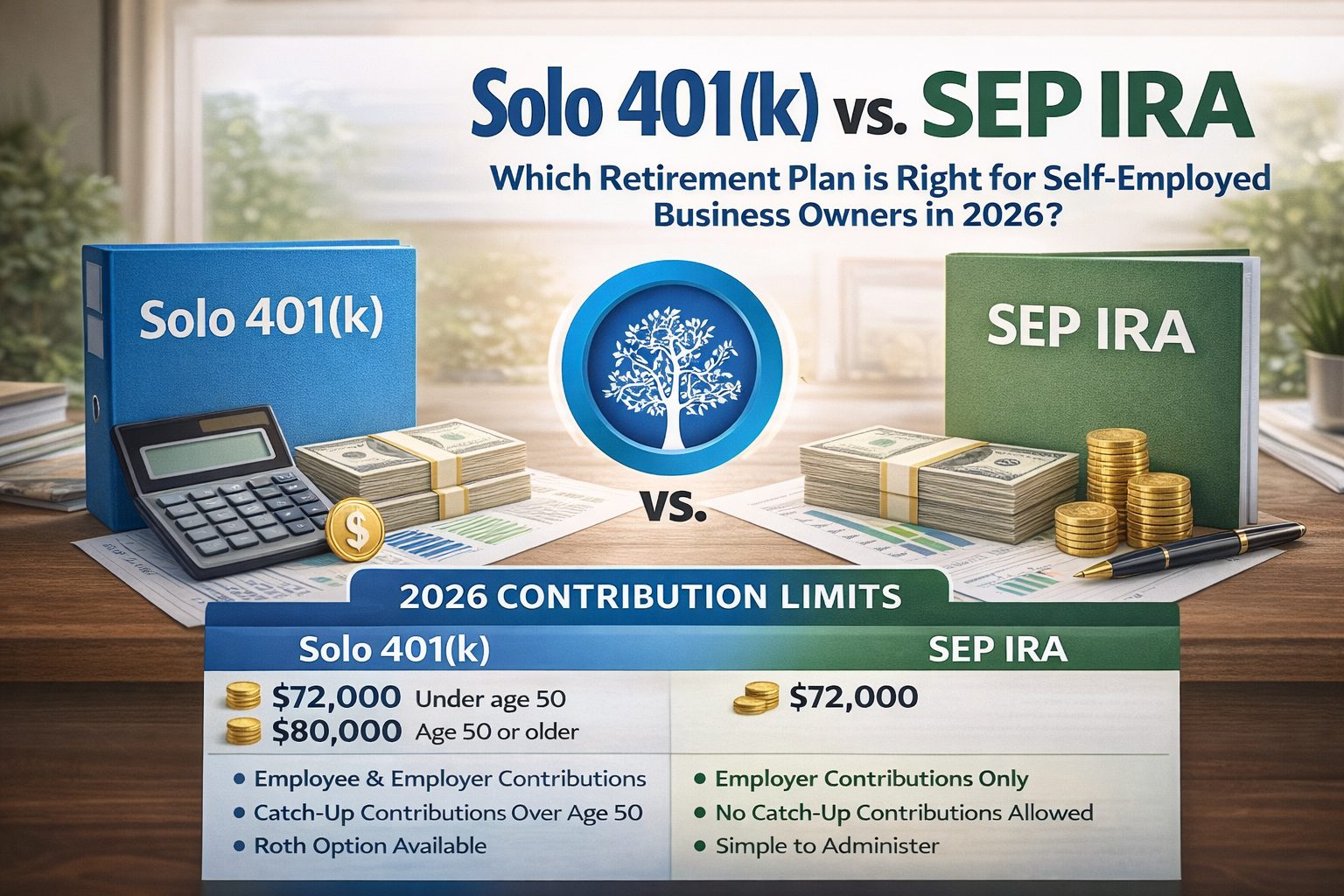
The SEP-IRA contribution is calculated entirely as an employer contribution: you can contribute up to 25 percent of your net self-employment income, with a maximum of $69,000. There is no employee contribution component. Your maximum contribution scales directly with your income.
The Solo 401(k) has two separate contribution buckets. As the employee, you can contribute up to $23,000 per year (plus $7,500 catch-up if you are 50 or older) regardless of what percentage of your income that represents. As the employer, you can contribute an additional 25 percent of net self-employment income. The total of both cannot exceed $69,000 ($76,500 with catch-up).
The practical implication is enormous at lower and middle income levels.
A Side-by-Side Comparison at Different Income Levels
At $30,000 net self-employment income:
- SEP-IRA maximum: approximately $5,577
- Solo 401(k) maximum: $23,000 (employee contribution alone)
- Difference: $17,423 more in the Solo 401(k)
At $60,000 net self-employment income:
- SEP-IRA maximum: approximately $11,154
- Solo 401(k) maximum: $23,000 employee + approximately $11,154 employer = $34,154
- Difference: $23,000 more in the Solo 401(k)
At $150,000 net self-employment income:
- SEP-IRA maximum: approximately $27,885
- Solo 401(k) maximum: $23,000 employee + approximately $27,885 employer = $50,885
- Difference: $23,000 more in the Solo 401(k)
At $250,000+ net self-employment income:
- Both plans approach the $69,000 annual maximum
- The difference narrows significantly at high income levels
The conclusion is clear: at virtually every income level below $370,000, the Solo 401(k) allows higher total contributions than the SEP-IRA. The only question is whether the additional administrative requirements of the Solo 401(k) are worth it for your situation.
Setup and Administrative Complexity
SEP-IRA: Minimal Administration
The SEP-IRA wins decisively on simplicity. There is no plan document to maintain, no annual filings required for most freelancers (Form 5500-EZ is required only if your plan assets exceed $250,000), and contributions can be made at any time up to your tax filing deadline including extensions. You can open a SEP-IRA in 30 minutes at any major brokerage. Total annual administrative burden: essentially zero.
Solo 401(k): Moderate Administration
The Solo 401(k) requires more upfront work. You must establish the plan by December 31 of the tax year for which you want to make contributions — you cannot open one in February after a good year and apply contributions retroactively. The brokerage provides plan documents, but you are technically required to maintain them. If your plan assets exceed $250,000, you must file Form 5500-EZ annually. Total annual administrative burden: moderate, roughly two to four hours per year.
The Roth Contribution Option
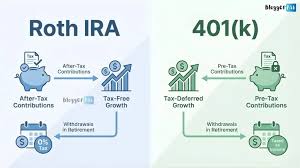
This is a significant differentiator for many freelancers. Several Solo 401(k) providers — including Fidelity and Charles Schwab — offer the ability to designate your employee contributions as Roth contributions. This means you contribute after-tax dollars that grow completely tax-free and can be withdrawn tax-free in retirement.
The SEP-IRA has no Roth option whatsoever. All SEP-IRA contributions are pre-tax, and all withdrawals in retirement are taxed as ordinary income.
For freelancers who want tax diversification in retirement — having both a pre-tax pool and a tax-free pool of money to draw from — the Roth Solo 401(k) is the only self-employment account that provides this at high contribution limits.
Loan Provisions
Some Solo 401(k) plan documents allow you to take loans from your account balance — typically up to 50 percent of your vested balance or $50,000, whichever is less. Loans must be repaid with interest within five years in most cases.
SEP-IRAs do not allow loans. You can take early withdrawals, but they are subject to income tax plus a 10 percent penalty if you are under age 59½.
For freelancers who value having a financial backstop in case of business emergencies, the loan provision of the Solo 401(k) adds meaningful value. That said, borrowing from retirement accounts should be a last resort, not a planning tool.
The Employee Restriction
This is the most important practical limitation of the Solo 401(k): you cannot use it if you have common-law employees other than your spouse. If you hire even one part-time W-2 employee (not a contractor), your Solo 401(k) becomes a standard small business 401(k) with very different rules and much higher administrative requirements.
The SEP-IRA has no such restriction. You can contribute to a SEP-IRA regardless of whether you have employees. If you have employees, you must make SEP-IRA contributions for them as well, at the same percentage of their compensation that you contribute for yourself — but the account structure itself is not invalidated.
Which Should You Choose?
Choose the Solo 401(k) if:
- Your net self-employment income is below $200,000 and you want to maximize contributions
- You want the Roth contribution option for tax diversification
- You want the potential ability to take loans from the account
- You have no W-2 employees (other than a spouse)
- You are willing to invest a few extra hours per year in administration
Choose the SEP-IRA if:
- Simplicity is your absolute top priority
- Your income is above $250,000 and both plans approach the same maximum anyway
- You have W-2 employees in your business
- You missed the December 31 plan establishment deadline and need to open an account before April 15
- You already have a well-funded SEP-IRA and switching feels unnecessarily disruptive
Can You Have Both?
Yes, with important limits. You can maintain both a SEP-IRA and a Solo 401(k), but the combined employer contributions across both plans cannot exceed the annual $69,000 limit. In practice, most freelancers find it simpler to choose one primary vehicle and supplement it with a Roth IRA rather than maintaining two self-employment retirement accounts simultaneously.
The Bottom Line
For the majority of freelancers — particularly those with income below $200,000 who want to maximize tax-sheltered contributions — the Solo 401(k) is the superior account due to its higher effective contribution limits at most income levels and its Roth option. The SEP-IRA is an excellent choice for those who prioritize simplicity, have employees, or missed the year-end setup deadline.
→ Best Retirement Plans for Self-Employed Americans → Roth IRA for Freelancers: Is It Worth It? → Best Tax Deductions for Freelancers → Complete Freelance Finance Guide