
Do Freelancers Need a Business License in the US? The Complete 2026 Guide
Whether you need a business license as a freelancer in the United States is one of the most frequently asked — and most frequently misunderstood — legal questions in the self-employment space. The confusion is understandable: there is no single, universal answer. Requirements vary by state, by city, by county, by profession, and by business structure. A freelance graphic designer in Austin, Texas faces completely different licensing requirements than a freelance financial advisor in New York City or a freelance massage therapist in California.
This guide cuts through the confusion with a systematic framework for determining exactly which licenses and registrations apply to your specific situation, what happens if you operate without required licenses, and how to find and file the right paperwork efficiently.
The Federal Level: No General Business License Required
Let us start with the good news: the federal government does not require a general business license for freelancers or self-employed individuals in the United States. There is no federal registration requirement simply for being in business as a sole proprietor or LLC.
However, certain federally regulated industries do require specific federal licenses or registrations. If your freelance work falls into any of the following categories, you may need federal authorization:
Financial services: Investment advisors and broker-dealers must register with the Securities and Exchange Commission (SEC) or FINRA. Financial planners who provide investment advice for compensation must typically register as investment advisors.
Transportation: Commercial drivers, including rideshare drivers operating as independent contractors beyond certain thresholds, may require federal Department of Transportation registrations.
Radio and broadcasting: Anyone operating a radio transmitter or broadcasting station requires a Federal Communications Commission (FCC) license.
Firearms and explosives: Any business involving the manufacture, sale, or importation of firearms requires a federal firearms license from the Bureau of Alcohol, Tobacco, Firearms and Explosives.
Drug manufacturing or testing: Businesses involved in pharmaceutical manufacturing or controlled substance handling require DEA registration.
Food production: Freelancers who produce food products for commercial sale at scale may need FDA registration.
For the vast majority of freelancers — writers, designers, developers, photographers, consultants, coaches, accountants, marketers, and other knowledge workers — none of these federal requirements apply. The licensing questions that matter are at the state and local level.
The State Level: Varies Significantly By State and Profession
At the state level, there are two distinct types of requirements that may affect freelancers: general business licenses and professional licenses.
General Business Licenses
Many states require any person or entity conducting business within the state to obtain a general business license, sometimes called a business tax certificate, business operating license, or trade license. The fee typically ranges from $25 to $400 and must be renewed annually.
States that generally require a business license for all businesses, including freelancers, include California (business license required at the city or county level in most jurisdictions), Nevada (state business license required for all businesses), Washington State (business license required through the Department of Revenue), and others. States without a general business license requirement at the state level include Texas, Florida, and several others — though local requirements may still apply.
The most reliable way to determine your state’s requirements is to visit your state’s official business portal or Secretary of State website. Most states have consolidated their business registration resources online.
Professional Licenses: The Most Important Category for Many Freelancers
Professional licensing is more consequential than general business licensing for many freelancers because operating in a licensed profession without the required license can result in significant penalties, fines, and in some cases criminal charges.
Professions that typically require state professional licenses include:
Healthcare: Physicians, nurses, therapists, counselors, physical therapists, occupational therapists, and virtually all licensed healthcare providers must hold state professional licenses. Telehealth freelancers providing services across state lines may need licenses in multiple states.
Legal services: Attorneys must be licensed by the state bar in any state where they practice. Paralegals who provide independent legal services (as opposed to working under attorney supervision) face strict restrictions in most states.
Financial services: Financial advisors, investment advisors, insurance agents, mortgage brokers, and similar professionals typically require state licensing in addition to any federal registration.
Real estate: Real estate agents and brokers must hold state real estate licenses.
Architecture and engineering: Licensed architects and professional engineers must hold state professional engineering or architecture licenses.
Contracting and construction: General contractors, electricians, plumbers, and other trade contractors typically require state contractor licenses.
Education: Private tutors may require state certifications in some jurisdictions, particularly for specialized educational services.
Personal services: Massage therapists, estheticians, cosmetologists, and similar personal service providers require state professional licenses in virtually all states.
If your freelance work falls into a licensed profession, maintaining your professional license is a legal requirement — not a suggestion. License renewals, continuing education requirements, and practice restrictions must be followed diligently.
The Local Level: City and County Requirements
Even if you satisfy all federal and state requirements, you may still need licenses or permits at the city or county level. Local licensing requirements are among the most varied and least publicized of all business requirements, and many freelancers are unaware they exist until they encounter a problem.
Home Occupation Permits
If you operate your freelance business from your home — which the vast majority of freelancers do — many cities and counties require a home occupation permit. These permits regulate the extent to which a residence can be used for commercial purposes, typically restricting things like client visits to the home, signage, employees, and business-related deliveries.
Home occupation permits are typically inexpensive ($25 to $100) and easy to obtain through your city clerk’s office. The key restriction to understand is whether your permit allows client visits — if you occasionally meet clients at your home office, confirm your permit explicitly allows this.
City Business Licenses
Many cities require a city business license separate from any county or state requirements. New York City, Los Angeles, Chicago, and most other major metropolitan areas have their own business licensing requirements. These are typically administered through the city’s finance department or business services office.
Zoning Regulations
Your local zoning laws may restrict commercial activity in residential zones. Most freelancers who work quietly from home without client visits, deliveries, or employees face minimal zoning issues. However, if your work involves any visible commercial activity — a sign, regular client traffic, commercial vehicles, or noise — you may need to confirm your zoning allows it or apply for a variance.
DBA (Doing Business As) Registration
If you operate your freelance business under a name other than your legal name, you almost certainly need to register a DBA — also called a fictitious business name, assumed name, or trade name. For example, if your legal name is John Smith but you operate as “Smith Creative Agency,” you need a DBA registration.
DBA registration is typically done at the county level and costs $10 to $100. The main purposes are to establish your right to use the business name in your jurisdiction, enable you to open a bank account in the business name, and provide public notice of who is behind the business name.
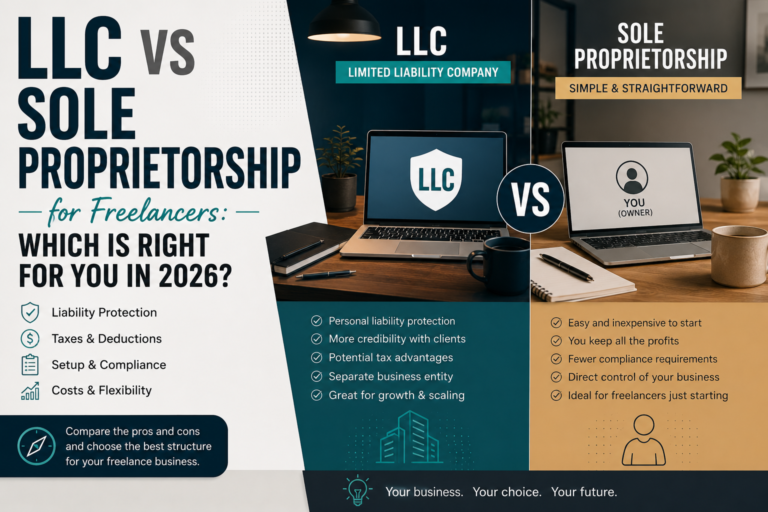
Note: If you form an LLC, you register the LLC name rather than a DBA — the LLC formation itself establishes your right to use that name in your state. However, if your LLC wants to do business under a name different from its registered LLC name, you still need a DBA for that additional name.
What Happens If You Operate Without Required Licenses
The consequences of operating without required licenses range from minor to severe depending on the type of license and your jurisdiction:
General business license violations: Typically result in fines and back fees. Most jurisdictions treat first-time violations as administrative matters rather than criminal ones, with fines ranging from $50 to several thousand dollars.
Professional license violations: Much more serious. Practicing a licensed profession without a license can result in substantial civil fines, injunctions barring you from practicing, and in some states, criminal charges. Clients who were harmed by unlicensed professional services may have strong civil claims against you.
Zoning violations: Can result in orders to cease business operations, fines, and required modifications to your home or property.
The general principle is: the more specialized and potentially harmful the professional service, the more seriously licensing violations are treated. A freelance writer operating without a city business license faces a small fine. A freelance financial advisor providing investment advice without the required licenses faces potential criminal prosecution by state and federal regulators.
A Systematic Approach to Determining Your Requirements
Follow these steps to identify all applicable licensing requirements for your freelance business:
Step 1: Visit your state’s official business portal and search for licensing requirements for your specific profession and business structure.
Step 2: If your profession involves potential licensing (healthcare, legal, financial, construction, personal services), contact your state’s licensing board for that profession to confirm current requirements.
Step 3: Contact your city and county clerk’s offices to inquire about local business license and home occupation permit requirements.
Step 4: If you operate under a business name other than your legal name, register a DBA with your county.
Step 5: Set a calendar reminder to renew all licenses and registrations before their expiration dates. Expired licenses are treated identically to no license in most jurisdictions.
The entire process — researching and filing all required licenses — typically takes one to three business days for most freelancers and involves fees totaling $100 to $500 in most jurisdictions. The peace of mind and legal protection this provides is well worth the time and cost.
→ LLC vs Sole Proprietorship for Freelancers → What Insurance Does a Freelancer Actually Need? → Complete Freelance Finance Guide