How Freelancers Can Get a Mortgage in the US: The Complete 2026 Guide
Getting a mortgage as a freelancer is one of the most challenging financial milestones in the self-employment journey — and one of the most achievable with proper preparation. The fundamental challenge is that mortgage lenders are designed to evaluate W-2 employees with predictable, documentable income. Freelancers have income that is variable, documented differently, and often reduced on paper by legitimate business deductions. But hundreds of thousands of self-employed Americans get approved for mortgages every year, and the strategies that make it possible are consistent and learnable.
This guide walks you through everything a freelancer needs to know to successfully navigate the mortgage process in 2026: how lenders calculate your qualifying income, what documentation you need, which loan programs are available, and how to optimize your financial profile in the years before you apply.
Why Mortgage Lenders Treat Freelancers Differently
When a lender evaluates a W-2 employee for a mortgage, the process is straightforward: they receive two years of W-2 forms showing consistent employment and income, verify employment with the employer, and use the gross W-2 income to calculate debt-to-income ratio. The process is systematic and well-defined.
For a freelancer, lenders face a different set of questions. Is the income stable or is it a one-time windfall? Will it continue at a similar level? How much of the reported gross revenue is actually available as personal income after business expenses? What is the likelihood of continued self-employment?
These are legitimate questions, and answering them requires more documentation than a W-2 return. But more documentation does not mean less chance of approval — it means a different process.
The Two-Year Self-Employment Requirement
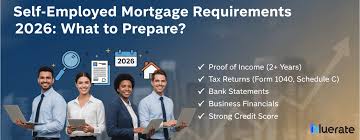
The most critical requirement for freelancers seeking a conventional mortgage is a minimum of two years of self-employment history. Most conventional lenders require two consecutive years of self-employment, documented by federal tax returns, before they will consider your freelance income as qualifying income.
This requirement exists because lenders want to see that your self-employment income is stable and established rather than a recent experiment that might not continue. Two years of documented income provides a statistical basis for projecting future earnings.
If you have less than two years of self-employment: You generally have two options. Wait until you have the required history, or explore alternative loan programs (discussed below) that have less strict requirements.
If you recently converted from employee to freelancer: The income from your employee period counts as employment history, but only your freelance income from the self-employment period is used for qualification. If you worked as an employee for five years and started freelancing 18 months ago, you have 18 months of qualifying self-employment income — insufficient for most conventional loans.
How Lenders Calculate Your Qualifying Income
This is the most important concept in freelance mortgage qualification, and it is where most freelancers encounter unexpected surprises.
Lenders use your net income from Schedule C — your gross freelance revenue minus all deductible business expenses — to calculate your qualifying income, not your gross revenue. They typically average this net income over the two most recent tax years.
The implication is significant: the more aggressively you have deducted business expenses (which is optimal for tax minimization), the lower your qualifying income appears to lenders, which reduces your maximum loan amount.
Example: You earned $150,000 in gross freelance revenue and deducted $60,000 in legitimate business expenses (home office, equipment, software, health insurance, retirement contributions), leaving $90,000 in net Schedule C income. Lenders will use approximately $90,000 as your qualifying income, not $150,000. If your prior year net income was $80,000, your two-year average is $85,000.
The Tension Between Tax Optimization and Mortgage Qualification
This creates a genuine strategic tension for freelancers who are planning to buy a home within the next one to two years.
Every dollar you deduct reduces your taxes — saving you 22 to 37 cents (depending on your bracket). But every dollar you deduct also reduces your qualifying income for mortgage purposes — which can reduce the maximum loan amount you qualify for by $3 to $4 (based on typical debt-to-income calculations).
For a freelancer planning to buy a home, temporarily being more conservative with deductions in the one to two tax years before applying — specifically reducing the most discretionary deductions — can significantly increase your qualifying income. The tax cost of claiming fewer deductions may be worth the benefit of qualifying for a larger mortgage or better interest rate.
Consult with both a CPA and a mortgage broker before making this trade-off. The right answer depends on your tax bracket, your target home price, and your current mortgage qualification status.
→ Best Tax Deductions for Freelancers and Independent Contractors
Essential Documentation for a Freelance Mortgage Application
Conventional mortgage applications for self-employed borrowers typically require:
Tax returns: Two years of complete personal federal tax returns including all schedules, particularly Schedule C. If you file a separate business return (for an LLC taxed as a partnership or S-Corp), two years of business returns as well.
Year-to-date profit and loss statement: A current P&L statement showing your income and expenses for the current year to date, typically prepared by a CPA for maximum lender credibility.
Bank statements: 12 to 24 months of business and personal bank statements to verify income deposits and reserves.
CPA letter: Many lenders require a letter from your CPA confirming your self-employment status, the nature of your business, and your assessment of the likelihood of continued income.
Proof of business existence: Business license, DBA registration, LLC formation documents, or other documentation showing your business is legitimate and established.
Client contracts or letters: Some lenders request evidence of ongoing client relationships — active contracts or client letters confirming continued work — to demonstrate income stability.
Social Security number and EIN: Both personal and business identification numbers.
Loan Programs Available to Freelancers
Conventional Loans (Fannie Mae and Freddie Mac)
Conventional loans backed by Fannie Mae and Freddie Mac are the most common mortgage type and are available to self-employed borrowers with two years of documented income. Requirements include a minimum credit score of 620 (with better rates available above 740), a down payment of at least 3 percent (though 20 percent avoids Private Mortgage Insurance), and a debt-to-income ratio below 43 percent.
FHA Loans
FHA loans are government-backed mortgages with more flexible qualification requirements: minimum 3.5 percent down payment and minimum 580 credit score. Self-employed borrowers still need two years of self-employment documentation, but the income and asset requirements are somewhat more flexible than conventional loans. FHA loans require mortgage insurance premium (MIP) for the life of the loan if the down payment is less than 10 percent.
Bank Statement Loans (Non-QM)
Bank statement loans are a significant alternative for freelancers whose tax returns understate their actual earning capacity due to heavy deduction usage. Rather than using tax returns, these loans qualify borrowers based on 12 to 24 months of bank deposits — either business deposits or personal deposits, depending on the program.
The lender calculates your qualifying income by averaging your monthly deposits and applying an expense factor (typically 50 percent for business accounts). For a freelancer with $200,000 in annual business deposits, the qualifying income might be calculated at $100,000 — significantly higher than Schedule C net income after heavy deductions.
Bank statement loans have trade-offs: interest rates are typically 0.5 to 1.5 percent higher than conventional rates, minimum down payments are usually 10 to 20 percent, and minimum credit scores are typically 620 to 680. For freelancers who cannot qualify under conventional income documentation but have strong cash flow, bank statement loans bridge an important gap.
VA and USDA Loans
Veterans and service members using VA loan benefits can qualify as self-employed borrowers with the same two-year documentation requirements. USDA rural development loans similarly accommodate self-employed borrowers in eligible rural areas. Both programs offer competitive rates and favorable terms.
Optimizing Your Profile Before Applying
The best time to start preparing for a freelance mortgage application is two years before you plan to buy. Here are the most impactful actions:
Build your credit score above 740: This qualifies you for the best available interest rates. Pay all debts on time, reduce credit card utilization below 30 percent, and avoid opening new credit accounts in the 12 months before your application.
Accumulate a 20 percent down payment: Eliminating PMI saves $100 to $300 per month on a typical mortgage and demonstrates financial stability to lenders. A larger down payment also reduces your loan amount and monthly payment.
Reduce your debt-to-income ratio: Pay down existing debts — student loans, car payments, credit cards — to reduce your monthly debt obligations. The less you owe each month relative to your income, the more house you can qualify for.
Maintain consistent or growing income: Lenders view increasing income trends favorably. Two consecutive years of income growth (even modest growth) is significantly more favorable than two years of declining income, even if the average is the same.
Work with a mortgage broker who specializes in self-employed borrowers: Not all mortgage brokers have experience with freelance clients. Find one who regularly works with self-employed borrowers and has access to bank statement loan programs in addition to conventional products.
→ Best Bank Accounts for Freelancers in the US → How to Budget When Your Income Is Irregular → LLC vs Sole Proprietorship for Freelancers → Complete Freelance Finance Guide